04
Feb
Why Your Breaker Trips When It Rains (Outdoor & GFCI Electrical Issues in the Lower Mainland)
If you’ve noticed your breaker (or GFCI outlet) trip more often when it’s raining, you’re not imagining it. In the Lower Mainland—Aldergrove, Langley, Abbotsford, Surrey, and Mission— wet weather can expose weaknesses in outdoor electrical equipment, aging connections, and moisture-prone wiring paths.
At Triton Electric, we see this a lot: “Everything’s fine all summer… then the first week of rain, the breaker starts popping.” Here’s what usually causes it, what you can safely check, and when it’s time to call an electrician.
What’s Actually Happening When It Trips in the Rain?
Most rain-related trips come from one of these:
- A ground fault (electricity leaking where it shouldn’t—often through moisture)
- Moisture in a connection causing a partial short
- A failing outdoor device that’s letting water in
- A weak/aging seal that only becomes a problem when it’s wet and windy
If the circuit is protected by a GFCI, it can trip even faster because it’s designed to shut off power when it detects small leakage currents—exactly what moisture can cause.
7 Common Reasons Breakers Trip When It Rains
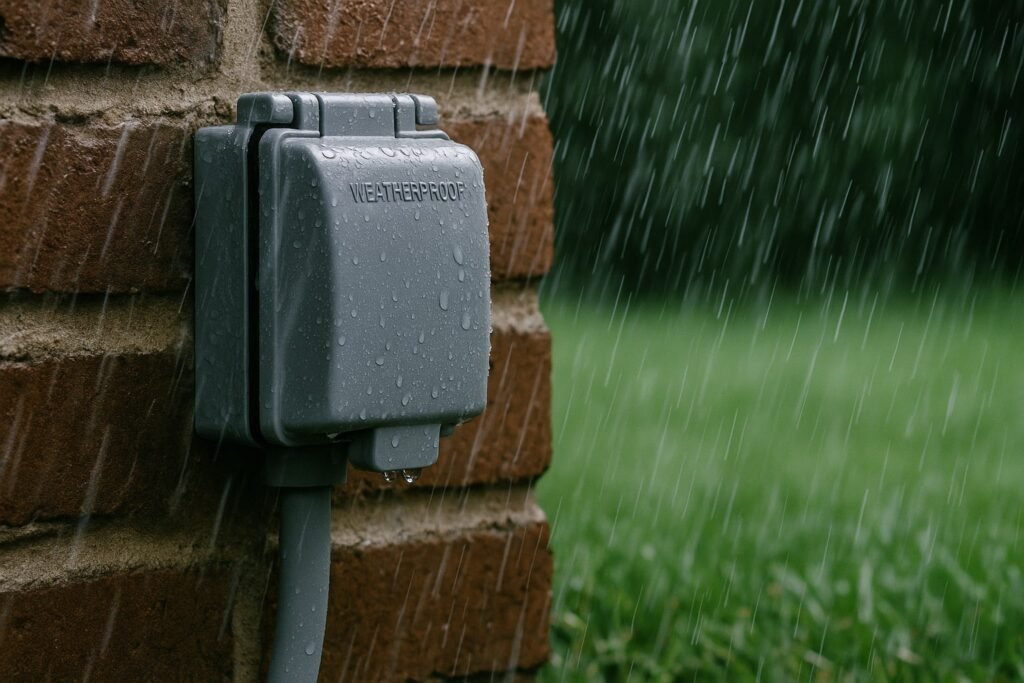
1) Water Inside an Outdoor Receptacle Box
Outdoor plugs are one of the most common culprits—especially if:
- The cover is cracked or doesn’t close properly
- The gasket is missing
- The box is loose or tilted so water can run in
- The outlet is older or worn out
Typical sign: The breaker trips during or right after rain, especially if nothing is plugged in outside.
2) A GFCI That’s Failing (or Wired With Downstream Outdoor Loads)
GFCIs wear out over time. Also, one GFCI can protect multiple outlets “downstream,” including outdoor plugs and sometimes garage/bathroom receptacles.
Typical sign: The GFCI won’t reset when it’s wet outside, but works later when it dries.
Reality: It might not be the GFCI device itself—it could be moisture at any downstream outlet it protects.
3) Landscape Lighting, Low-Voltage Transformers, or Yard Wiring
Rain can reveal damaged insulation or splices that weren’t made in proper weatherproof enclosures.
Typical sign: Trips happen at night when the lights come on and it’s raining, or right after heavy rain.
4) Exterior Light Fixtures With Water Ingress
Porch lights, soffit lights, and exterior sconces can fill with moisture if they’re not sealed properly, or if the fixture is failing.
Typical sign: Tripping starts after wind-driven rain, and it’s tied to a specific switch or exterior light circuit.
5) Water Getting Into a Junction Box or Splice Point
Outside junction boxes, attic boxes near soffits, or garage junction points can become moisture paths—especially if there’s a missing connector, cracked cover, or poor sealing.
Typical sign: Intermittent trips that are hard to reproduce, but correlate with heavy rain.
6) Moisture in Underground Conduit or Damaged Buried Cable
If you have buried wiring to:
- a shed
- a detached garage
- a backyard office
- a hot tub area
- driveway gate power
…water intrusion or cable damage can cause rain-related faults.
Typical sign: Trips happen only during wet weeks, or after prolonged rainfall (not necessarily the first day).
7) A Circuit Overload + Moisture = “The Perfect Storm”
Sometimes the circuit is already close to its limit (garage freezers, heaters, pumps, tools), and moisture adds enough leakage to push it over the edge—especially with GFCI/AFCI protection.
Typical sign: Trips happen when certain loads are running, and rain makes it happen more frequently.
What You Can Safely Check (No Tools, No Guesswork)
A few safe checks you can do without opening anything:
- Look for obvious water entry
- Outdoor covers not closing
- Cracked covers
- Loose boxes
- Visible water droplets inside the cover
- Unplug anything outside
If something is plugged into an outdoor outlet (string lights, patio heaters, holiday lights, pond pump), unplug it and see if the tripping stops. - Identify which breaker
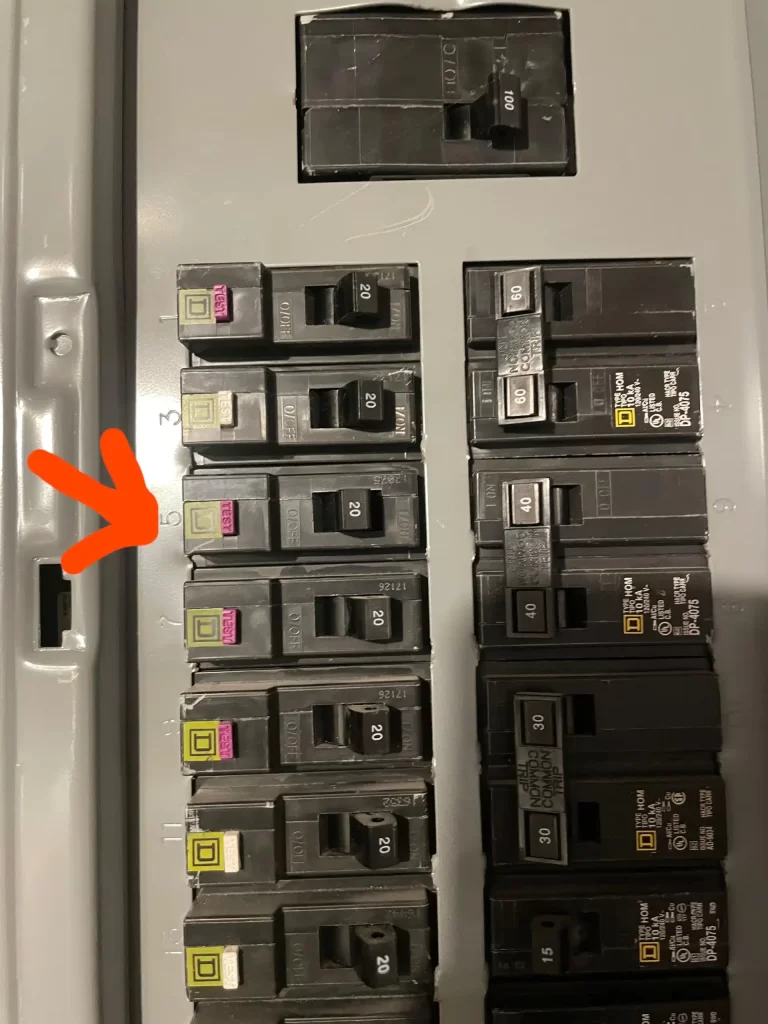
If you can, note what that breaker feeds (garage plugs, exterior lights, backyard power, etc.). This helps pinpoint the issue faster.
If tripping continues with everything unplugged, it’s often a device/connection issue on the circuit.
What NOT to Do
- Don’t “upgrade” the breaker to a larger size to stop tripping.
- Don’t bypass a GFCI (it’s protecting you).
- Don’t keep resetting repeatedly if it trips immediately—there’s a reason.
How We Diagnose Rain-Related Tripping
When Triton Electric is called for this, we typically:
- Test GFCI protection and verify downstream loads
- Check exterior receptacles/boxes for water intrusion
- Inspect exterior lighting connections and junction points
- Megger/test insulation resistance where appropriate
- Isolate sections of the circuit to find the exact fault location
- Repair/replace failed devices and weatherproofing properly
The goal is not just “get it working”—it’s find the exact cause so it doesn’t keep happening every rainy week.
When to Call an Electrician Right Away
Call sooner if you notice:
- Burning smell, heat, discoloration at a plug/switch
- Repeated immediate trips
- Water visible inside electrical equipment
- Outdoor power feeding a hot tub, shed, or detached building
Electrical issues + moisture can escalate fast, and the fix is usually straightforward once the source is located.
Need Help in Aldergrove or the Lower Mainland?
If your breaker trips when it rains, we can troubleshoot the circuit and fix the outdoor/GFCI issue properly.
Triton Electric serves Aldergrove, Langley, Abbotsford, Surrey, Mission, and surrounding areas.
Call/Text: 604-300-4215
Quick FAQ
Why does my breaker only trip during heavy rain?
Wind-driven rain can force moisture into covers, fixtures, or junction points that stay dry during light rain.
Is it usually the GFCI outlet?
Sometimes—but often it’s a downstream outlet/fixture letting water in, and the GFCI is just doing its job.
Can an outdoor outlet trip a breaker even if nothing is plugged in?
Yes. Water intrusion or a failing receptacle can create leakage/ground faults without anything plugged in.