15
Mar
The Great Lighting Debate: Incandescent vs. LED Bulbs
For over a century, incandescent light bulbs were the standard in homes and businesses worldwide. However, with the advent of LED (light-emitting diode) technology, the lighting industry has undergone a massive transformation. The debate between incandescent and LED bulbs centers around efficiency, longevity, cost, and environmental impact. In this article, we will compare these two lighting technologies, weighing their advantages and disadvantages to help consumers make informed choices.
Understanding Incandescent Light Bulbs
Incandescent bulbs have been in use since Thomas Edison’s famous invention in 1879. They work by passing an electric current through a tungsten filament, which heats up and emits visible light.
Advantages of Incandescent Bulbs
- Affordability – Incandescent bulbs have a low upfront cost, making them accessible to almost everyone.
- Warm Light Output – They produce a warm, natural light that many people find aesthetically pleasing.
- Dimmability – Incandescent bulbs are easily dimmable with standard dimmer switches.
- Immediate Full Brightness – They do not require any warm-up time and provide instant full brightness upon being switched on.
- Compatibility – They work with traditional fixtures without requiring special adapters or drivers.
Disadvantages of Incandescent Bulbs
- Energy Inefficiency – Incandescent bulbs waste about 90% of their energy as heat rather than light, making them highly inefficient.
- Short Lifespan – A typical incandescent bulb lasts between 750 to 2,000 hours, requiring frequent replacements.
- Higher Long-Term Costs – Although the initial cost is low, frequent replacements and high energy consumption make them more expensive in the long run.
- Environmental Impact – They contribute significantly to energy consumption, leading to higher carbon emissions.
Understanding LED Light Bulbs
LED bulbs use semiconductor technology to convert electricity directly into light, making them far more efficient than incandescent bulbs.
Advantages of LED Bulbs
- Energy Efficiency – LEDs use up to 80% less energy than incandescent bulbs, significantly reducing electricity bills.
- Long Lifespan – A single LED bulb can last between 25,000 to 50,000 hours, reducing the need for frequent replacements.
- Lower Heat Output – LEDs generate very little heat, making them safer to use and reducing cooling costs in warmer climates.
- Eco-Friendly – Since they consume less energy and last longer, LEDs contribute less to landfill waste and reduce overall energy demand.
- Versatile Design Options – LEDs come in various colors, shapes, and brightness levels, suitable for different applications.
- Smart Lighting Capabilities – Many LED bulbs are compatible with smart home systems, allowing users to control brightness and color remotely.
Disadvantages of LED Bulbs
- Higher Initial Cost – Although prices have decreased over the years, LED bulbs still cost more upfront than incandescent bulbs.
- Potential Compatibility Issues – Some older fixtures and dimmer switches may not be compatible with LED bulbs without modification.
- Color Variability – Not all LED bulbs produce the warm glow of incandescents, though newer models have improved significantly in this regard.
Energy Consumption and Cost Comparison
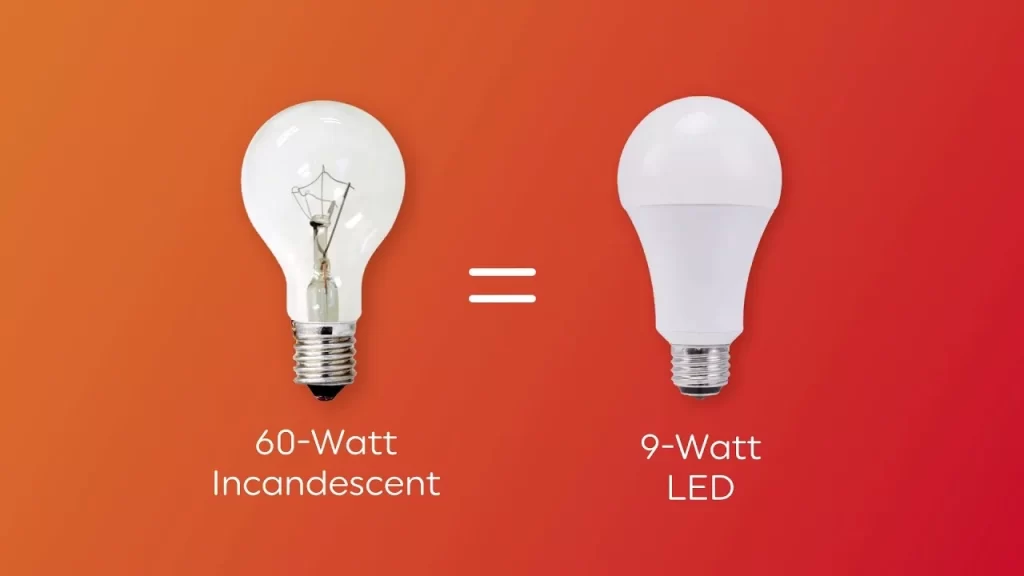
When comparing energy consumption, the differences between the two technologies become clear. A traditional 60-watt incandescent bulb produces about 800 lumens of light, but an LED bulb can produce the same brightness using only 8 to 10 watts. Over time, this translates to substantial savings on electricity bills.
For example, if you use a 60-watt incandescent bulb for five hours a day, it consumes approximately 110 kWh per year. In contrast, an equivalent LED bulb would only consume about 15 kWh per year. Assuming an electricity rate of $0.12 per kWh, the annual cost for the incandescent bulb would be $13.20, whereas the LED bulb would cost just $1.80.
Although the initial purchase price of an LED bulb may be higher, its energy savings quickly compensate for the upfront cost. When factoring in the long lifespan of LEDs, the total cost savings over time can be significant.
Environmental Impact
The environmental impact of lighting is another major consideration. Since incandescent bulbs are inefficient, they contribute more to carbon emissions. LED bulbs, on the other hand, reduce energy consumption and greenhouse gas emissions. Additionally, their long lifespan means fewer resources are needed for manufacturing and disposal.
Many governments worldwide have implemented regulations to phase out incandescent bulbs in favor of energy-efficient alternatives like LEDs and CFLs. The shift to LED technology aligns with global sustainability goals by reducing reliance on fossil fuels and decreasing landfill waste.
Performance and Quality of Light
Many people prefer incandescent bulbs because of their warm, soft glow that closely resembles natural sunlight. While early LED bulbs struggled to replicate this warmth, modern LED technology has significantly improved. Today, LED bulbs come in a variety of color temperatures, ranging from warm white (2700K) to daylight (5000K+), allowing consumers to choose lighting that suits their preferences.
Another critical aspect is dimmability. Traditional incandescent bulbs work well with standard dimmer switches, whereas some LEDs require special dimmers. However, newer LED models are increasingly compatible with traditional dimming systems.
Which One Should You Choose?
The choice between incandescent and LED bulbs ultimately depends on individual needs and priorities. Here’s a quick breakdown:
- If you prioritize cost-effectiveness and energy efficiency, LED bulbs are the clear winner.
- If you prefer aesthetic warmth and traditional lighting, incandescent bulbs may still appeal to you, but newer LED options can provide similar warmth.
- If you want long-term savings and minimal maintenance, LED bulbs offer a far superior lifespan.
- If you need dimmable lighting, ensure you choose dimmable LED bulbs compatible with your dimmer switch.
- If you are environmentally conscious, LED bulbs significantly reduce energy waste and carbon footprint.

The Future of Lighting
The lighting industry continues to evolve, with LEDs leading the way in innovation. As technology advances, LED bulbs are becoming even more efficient, affordable, and versatile. Smart lighting systems, color-changing LEDs, and improved dimmability are making LEDs the preferred choice for modern homes and businesses.
Incandescent bulbs, while still in use, are gradually being phased out due to their inefficiency. Many countries have already implemented restrictions or bans on traditional incandescent bulbs, encouraging the adoption of LED alternatives.
Conclusion
When comparing incandescent and LED bulbs, LEDs emerge as the superior choice in nearly every aspect—energy efficiency, cost savings, longevity, and environmental impact. While incandescent bulbs may still have niche applications, the benefits of switching to LEDs far outweigh their disadvantages.
As consumers become more aware of the long-term savings and environmental benefits, the transition to LED lighting will continue to grow. Whether upgrading a single bulb or switching an entire home or office, making the switch to LED technology is a smart investment in both the present and the future of lighting.